Baseball Cap vs. Sun Visor: Which Is Better for Workplace Safety for Outdoor Working Professionals?
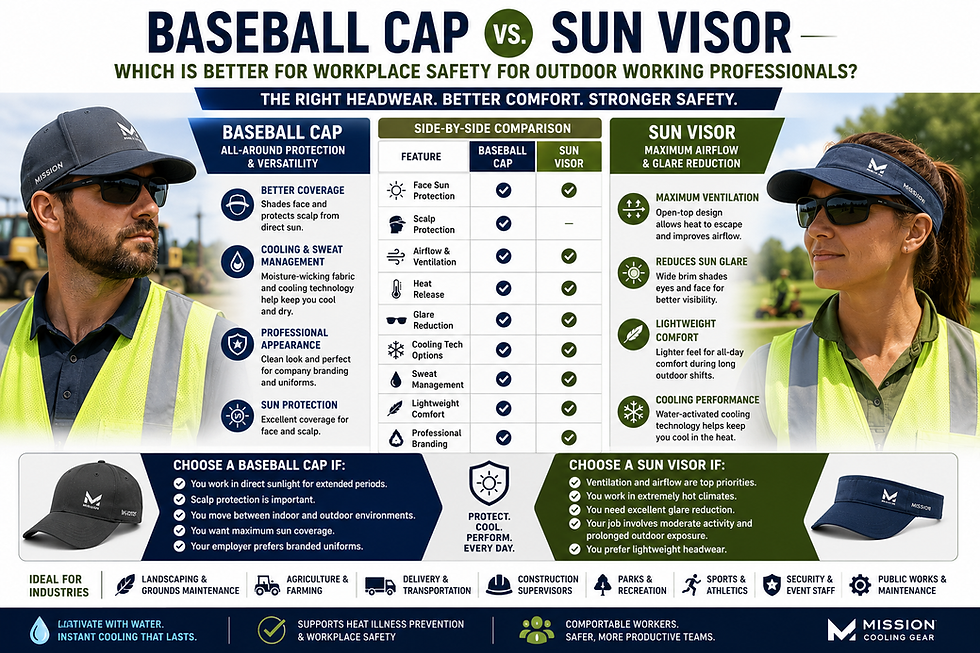
Outdoor workers face daily challenges from sun exposure, heat, glare, and environmental conditions that can impact comfort, productivity, and workplace safety. Choosing the right headwear is an important part of an effective heat illness prevention and sun protection strategy.
Two popular options among outdoor professionals are baseball caps and sun visors. Both offer unique advantages, but the best choice often depends on the specific work environment, job responsibilities, and personal comfort preferences.
Why Headwear Matters for Outdoor Worker Safety
Extended exposure to sunlight and high temperatures can contribute to:
Heat stress and heat-related illness
Fatigue and decreased productivity
Sunburn and UV exposure
Eye strain from glare
Reduced concentration and situational awareness
Proper headwear can help minimize these risks while improving worker comfort throughout the day.
Baseball Cap Benefits for Outdoor Workers
Baseball caps remain one of the most popular choices for outdoor professionals because they provide all-around functionality and versatility.
Advantages of Baseball Caps
Better Overall Head Coverage
Baseball caps provide shade for the face while also covering the scalp, helping protect the top of the head from direct sunlight.
Enhanced Cooling Technology Options
Many modern cooling baseball caps, including Mission Cooling Caps, feature moisture-wicking fabrics and water-activated cooling technology that can help reduce heat buildup.
Improved Sweat Management
Baseball caps often include sweatbands and moisture-wicking materials that help manage perspiration during physically demanding work.
Professional Appearance
Many employers prefer baseball caps because they offer a clean, uniform appearance and can easily display company logos or branding.
Best Industries for Baseball Caps
Baseball caps are particularly well-suited for:
Landscaping and grounds maintenance
Delivery and transportation services
Utility workers
Agriculture and farming
Construction supervisors
Public works personnel
Outdoor maintenance crews
Warehouse and logistics personnel working indoors and outdoors
Sun Visor Benefits for Outdoor Workers
Sun visors offer a different approach by prioritizing airflow and facial sun protection.
Advantages of Sun Visors
Maximum Ventilation
Unlike baseball caps, sun visors leave the top of the head uncovered, allowing heat to escape more easily and improving airflow.
Reduced Sun Glare
The visor brim helps shade the eyes and face, reducing glare and improving visibility when working outdoors.
Lightweight Comfort
Sun visors are often lighter than traditional hats, making them comfortable for workers who spend long periods outside.
Cooling Performance
Mission Cooling Sun Visors combine lightweight construction with water-activated cooling technology, helping workers stay comfortable during hot weather conditions.
Best Industries for Sun Visors
Sun visors are especially beneficial for:
Golf course operations
Parks and recreation staff
Athletic coaches and trainers
Sports officials and referees
Outdoor event personnel
Security officers
Community outreach teams
Nursery and greenhouse employees
Side-by-Side Comparison
Feature | Baseball Cap | Sun Visor |
Face Sun Protection | Excellent | Excellent |
Scalp Protection | Excellent | Limited |
Airflow & Ventilation | Good | Excellent |
Heat Release | Good | Excellent |
Glare Reduction | Excellent | Excellent |
Cooling Technology Options | Excellent | Excellent |
Sweat Management | Excellent | Good |
Lightweight Comfort | Good | Excellent |
Professional Branding | Excellent | Good |
Which Option Is Better for Workplace Safety?
The answer depends largely on the job.
Choose a Baseball Cap If:
You work in direct sunlight for extended periods.
Scalp protection is important.
You frequently move between indoor and outdoor environments.
You want maximum sun coverage.
Your employer prefers branded uniforms.
Choose a Sun Visor If:
Ventilation and airflow are top priorities.
You work in extremely hot climates.
You need excellent glare reduction.
Your job involves moderate activity and prolonged outdoor exposure.
You prefer lightweight headwear.
The Mission Cooling Advantage
Whether choosing a Mission Cooling Baseball Cap or a Mission Cooling Sun Visor, both products offer benefits that support outdoor worker wellness. Mission's cooling technology helps provide cooling comfort when activated with water, while moisture-wicking materials help manage sweat and improve comfort throughout the workday.
For organizations focused on heat illness prevention and employee wellness, cooling headwear can be a practical addition to existing workplace safety programs.
Conclusion
Both baseball caps and sun visors can support workplace safety for outdoor professionals. Baseball caps provide superior overall sun coverage and versatility, while sun visors excel in ventilation, airflow, and lightweight comfort.
For many workers, the best choice comes down to the specific demands of the job. Employers may even consider offering both options so employees can select the headwear that best supports their comfort and productivity while working outdoors.
Disclaimer: This article is for informational purposes only and does not provide medical advice. Headwear may help reduce sun exposure and improve comfort but should be used in conjunction with proper hydration, sunscreen, shade, rest breaks, and employer heat illness prevention procedures. Workers experiencing symptoms of heat-related illness should seek immediate medical attention.
Disclaimer: This article is for informational purposes only and does not provide medical advice. Headwear may help reduce sun exposure and improve comfort but should be used in conjunction with proper hydration, sunscreen, shade, rest breaks, and employer heat illness prevention procedures. Workers experiencing symptoms of heat-related illness should seek immediate medical attention.


Comments